Group, aggregate, and reshape
3.1.1
Summarize values by group and decide how missing categories affect the result.
On this page
Aggregate or transform
groupby splits data by key. agg reduces each group into summary values. transform returns values aligned to the original rows, useful for group means or shares. Pass dropna=False if a missing group key should appear in the output.
import pandas as pd
sales = pd.DataFrame({"item": ["Tea", "Tea", "Cake"], "units": [2, 4, 3]})
print(sales.groupby("item")["units"].sum().to_dict())
print(sales.groupby("item")["units"].transform("mean").tolist())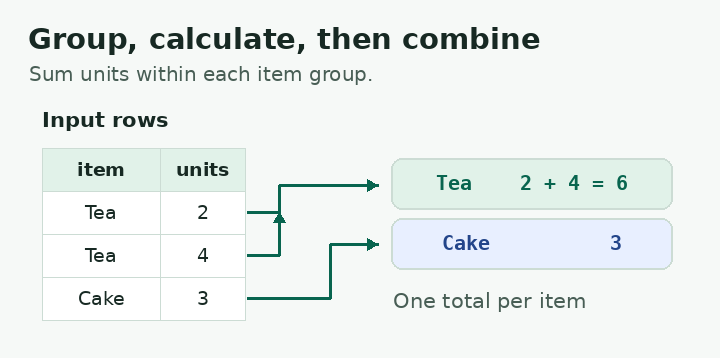 Download image
Example output
{'Cake': 3, 'Tea': 6}
[3.0, 3.0, 3.0]
Compare groups with a pivot table
Use pivot when each index and column pair is unique. Use pivot_table with an explicit aggfunc when several records share a pair. Fill absent combinations with zero only if that matches what the missing combination means.
import pandas as pd

sales = pd.DataFrame({"item": ["Tea", "Tea", "Tea"], "store": ["A", "A", "B"], "units": [2, 4, 3]})
table = sales.pivot_table(index="item", columns="store", values="units", aggfunc="sum")
print(table.loc["Tea", ["A", "B"]].tolist())
Example output
[6, 3]