Reshape between wide and long tables
3.1.1
Move repeated measurement columns into rows and choose how to pivot them back.
On this page
Move measurement columns into rows
Wide data can store one column per month. melt keeps the identifier columns and puts the former column names and their values into two columns. The row grain changes from one row per store to one row per store and month.
import pandas as pd
wide = pd.DataFrame({"store": ["A", "B"], "Jan": [8, 6], "Feb": [10, 9]})
long = wide.melt(id_vars="store", var_name="month", value_name="units")
for row in long.itertuples(index=False):
print(row.store, row.month, row.units)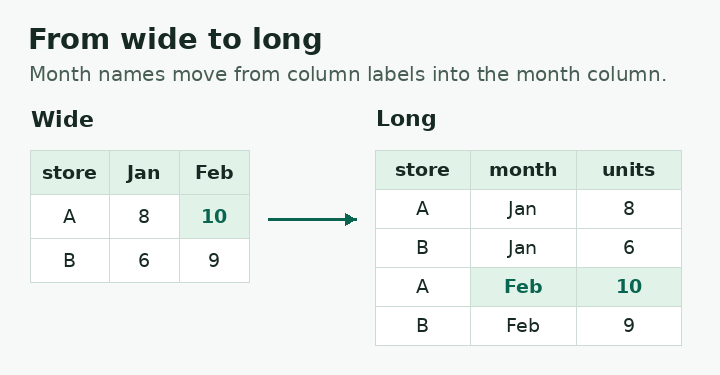 Download image
Example output
A Jan 8
B Jan 6
A Feb 10
B Feb 9
Pivot unique pairs or aggregate repeats
pivot requires each index and column pair to be unique. If multiple rows for one store and month represent separate orders, use pivot_table with a deliberate aggregation. Verify the row grain before deciding whether summing is meaningful.
import pandas as pd

orders = pd.DataFrame({
    "store": ["A", "A", "A"],
    "month": ["Jan", "Jan", "Feb"],
    "units": [3, 5, 10],
})
summary = orders.pivot_table(index="store", columns="month", values="units", aggfunc="sum")
print(summary.loc["A", ["Jan", "Feb"]].tolist())
Example output
[8, 10]